Nixodine and STRYK: a nicotine analogue is not synthetic nicotine
Short answer: Nixodine in current STRYK products is described by the brand as 6-methylnicotine (6-MN), a synthetically manufactured nicotine analogue. It is not synthetic nicotine. Synthetic nicotine is the same nicotine molecule made without tobacco; 6-MN is a different molecule with an additional methyl group.
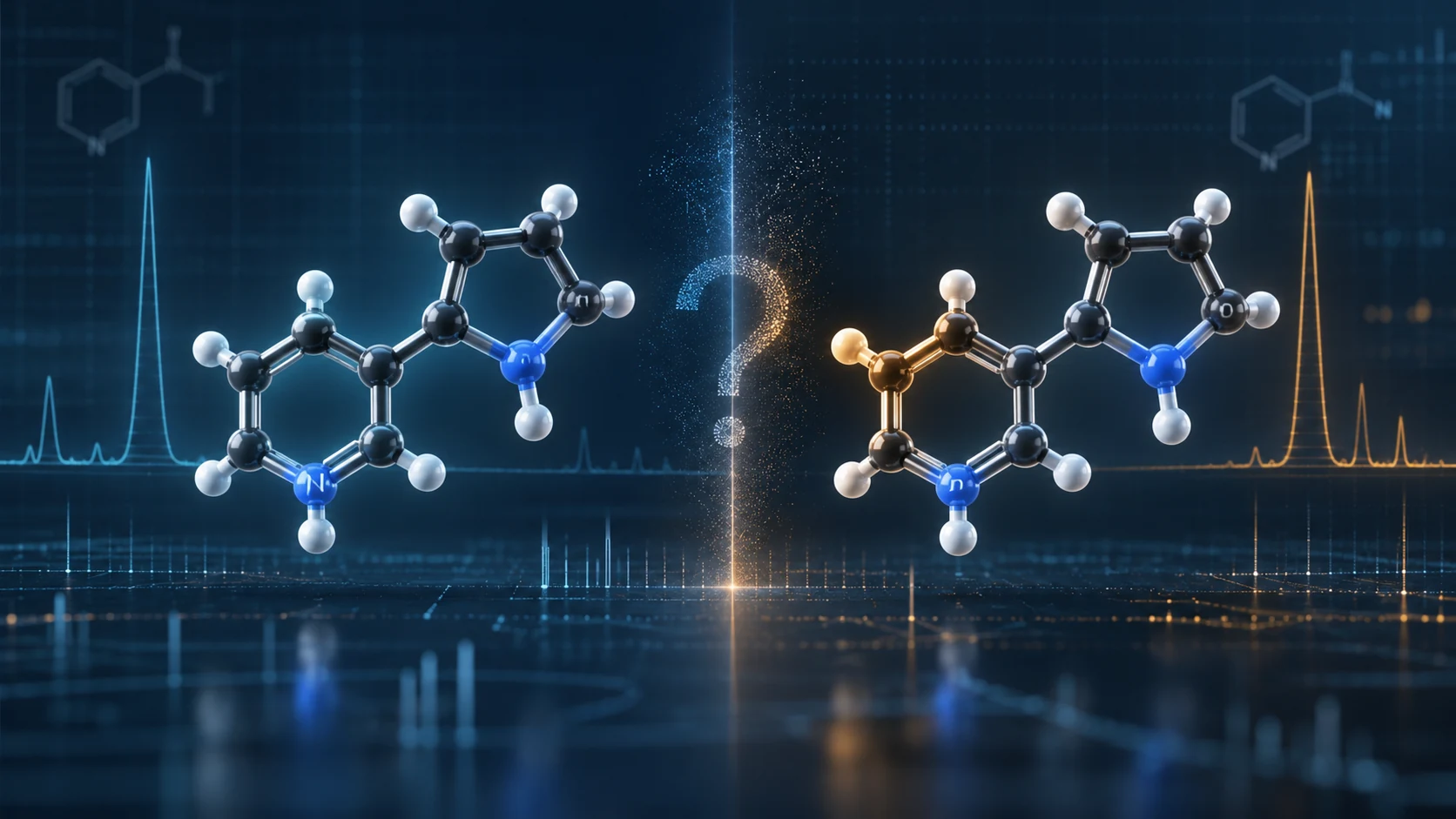
Three terms that must not be conflated
| Term | What it is | Is the molecule nicotine? |
|---|---|---|
| Tobacco-derived nicotine | Nicotine extracted and purified from tobacco leaf. | Yes |
| Synthetic nicotine | Nicotine manufactured without tobacco feedstock. | Yes—the same base molecule, made by another route |
| 6-methylnicotine | A chemical analogue of nicotine, also called 6-MN. | No—a structurally related but distinct molecule |
For the two production routes to the conventional nicotine molecule, see our review of tobacco-derived and synthetic nicotine.
STRYK is the concrete oral-pouch case
STRYK describes its US oral pouches as tobacco-free and powered by Nixodine. The brand’s explainer and FAQ define Nixodine as 6-methylnicotine and as a “synthetic nicotine-analog compound”. The range lists Apple Cider, Spearmint, Wintergreen, Mocha and Citrus, with 20 pouches per can.
The strength labelling needs particular care. STRYK displays levels 4, 8 and 12 for its core range and 8 and 16 for certain editions, but its FAQ explicitly says the numbers are product descriptors and not milligram amounts. They cannot be compared with mg per pouch or put into a conventional nicotine index without a verified quantity and a method designed for 6-MN.
What the research shows—and does not show
An independent European laboratory study from Sciensano analysed products marketed as tobacco- and nicotine-free. The samples contained no nicotine but did contain 6-MN, in some cases up to 20 mg per pouch. The study concerned NoNIC products, not STRYK, but demonstrates why “nicotine-free” does not mean pharmacologically inactive when a nicotine analogue is present.
A 2026 Toxicology Reports study compared Nixodine-S with nicotine in laboratory and animal models. Pure (S)-6-MN was more acutely toxic than nicotine in the in vivo model used. The diluted Nixodine-S formulation showed lower cytotoxicity than nicotine under volume-equivalent exposure in one cell assay and activated several nicotinic acetylcholine receptors. These results are formulation- and model-specific; they do not establish safety, dependence risk or long-term outcomes in humans.
The Nixodine name has been used in different ways
A 2024 scientific review documented how Nixodine and related names first appeared in marketing for nicotinamide-based mixtures and later for products containing 6-MN. The trade name alone is therefore not a sufficient ingredient description. For the current STRYK range, the brand’s present information identifies 6-methylnicotine.
Other product names associated with 6-MN include NoNIC in European pouches and Metatine in US vape products. That does not mean the products share formulation, dose, quality or risk profile.
Regulation is not a simple loophole
FDA’s public substance registry contains a validated chemistry record for (S)-6-methylnicotine. A registry record identifies a substance; it is not a marketing authorization or a safety assessment of STRYK. At the same time, 6-MN is a different molecule from nicotine, so rules expressly covering “nicotine from any source” do not by themselves resolve how every analogue will be classified.
Legal status must therefore be assessed by country, product, use and current regulator interpretation. Availability or a “contains no nicotine” statement proves neither that a product is risk-free nor that a regulator has authorized it.
What the industry should require before scaling 6-MN
- An exact 6-MN amount per pouch using a validated analytical method.
- A complete ingredient, impurity and stability profile.
- Pharmacokinetic and receptor-effect evidence from independent human studies.
- Evidence on acute and long-term use, dependence potential and accidental exposure.
- Clear classification and labelling in every intended market.
- Formulation-specific comparison rather than assumptions based on the Nixodine name.
Our assessment Nixodine and STRYK are relevant innovation and regulatory cases, but they should be described as a nicotine analogue and an oral pouch—not as a new form of synthetic nicotine. Commercial development is moving faster than independent human evidence.
Sources and research
Need to assess a new active ingredient or product category?
Book an initial call